
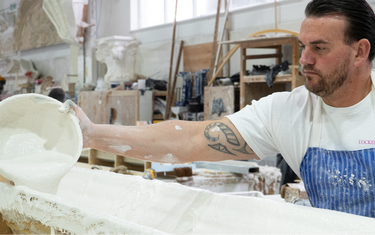
Creating a beautiful, traditional fibrous cornice is a true craft. If you’re looking to produce crisp, elegant details that stand the test of time, choosing the right plaster is the first step toward success.
At Industrial Plasters, we are often asked which products provide the best balance of workability and performance for run-moulding and casting. Here are our top recommendations for your next project.

Our Recommendations:
For standard cornice work, you want a plaster that is consistent, easy to mix, and reliable during the casting process.
-
Fine Casting Plus: This Saint-Gobain Formula plaster is widely considered one of the best choices for cornice production. Plasterers favour it for its workability and how easily it thickens while having more "body". This helps with running, as it's easier to shape and build up.
-
Prestia Casting Plaster: Another favourite among professionals, this Siniat plaster is known for its ease of use and consistent setting times, making it ideal for the repetitive nature of workshop cornice production.
Strength vs. Application:
It is important to note that both Fine Casting Plus and Prestia Casting sit at the lower end of the strength range for casting plasters. However, for fibrous cornices, this is actually unimportant.
Because cornices are installed high up on a wall or ceiling, they are out of reach of foot traffic and physical contact.
Essential Reinforcement:
No fibrous cornice is complete without proper reinforcement. To ensure your casts are lightweight yet structurally sound, we recommend using these traditional materials alongside your plaster:
-
Jute Scrim: Layers of scrim saturated in plaster provide the tensile strength needed for long lengths of cornice.
- Timber Laths: The backbone of fibrous plasterwork. Laths provide additional flexural strength, but are mainly used to aid with fitting. They provide essential rigid support to the back of the cornice, making it easier to handle and install without the risk of snapping or cracking.
Final Pro-Tip:
Always remember to store your plaster in a dry, cool place off the floor. Even the best plaster can suffer if it absorbs moisture from the air before you've had a chance to mix it!


